
Custom hospital management system for a 250-bed NABH-accredited super-specialty hospital
Consolidated patient master, OPD, IPD, lab, pharmacy, and operational reporting into a single platform for AIMS Hyderabad — a multi-specialty hospital serving Sindh, Pakistan.
BySyed Muhammed Bilal·Founder, XenaraThe client
Asian Institute of Medical Sciences (AIMS) is a 250-bed NABH-accredited super-specialty hospital located in Hyderabad, Sindh, Pakistan. AIMS provides care across multiple specialties — neurosurgery, gynecology and obstetrics, general surgery, plastic surgery, cardiology, nephrology, gastroenterology, endocrinology, neurology, urology, and infectious diseases — supported by an in-house ICU, lab, pharmacy, CT scan, angiography suite, and Fibroscan.
AIMS operates at the scale where paper-based workflows and isolated SaaS tools stop being viable: multi-specialty admissions, high outpatient volumes, lab/pharmacy throughput, multi-tier billing, insurer panels, and NABH-aligned audit requirements. The hospital needed a single platform that fit the operation — not the other way around.
What the hospital needed
- One patient identity across every department — admissions, OPD, IPD, lab, pharmacy, billing.
- Multi-tier OPD billing — self-pay, panel, insurer, corporate discount, with cash and digital payment flows.
- IPD workflow — admission, ward management, daily charge-out, discharge summaries.
- Lab module — test ordering, result entry, signed reports, lab-to-billing handoff.
- Pharmacy module — inventory, dispensing, expiry tracking, prescription-to-pharmacy flow.
- NABH-aligned compliance — role-based access, full audit trail, accreditation-ready exports.
- Operational reporting — daily, weekly, and monthly dashboards for hospital leadership, with regulator-ready exports.
- Connectivity resilience — keep working through power and broadband gaps that are routine in Pakistani hospital environments.
What Xenara built
Xenara designed and shipped a custom hospital management system (HMS) shaped around the operational reality at AIMS — built as a unified platform across every clinical and administrative module the hospital depends on.
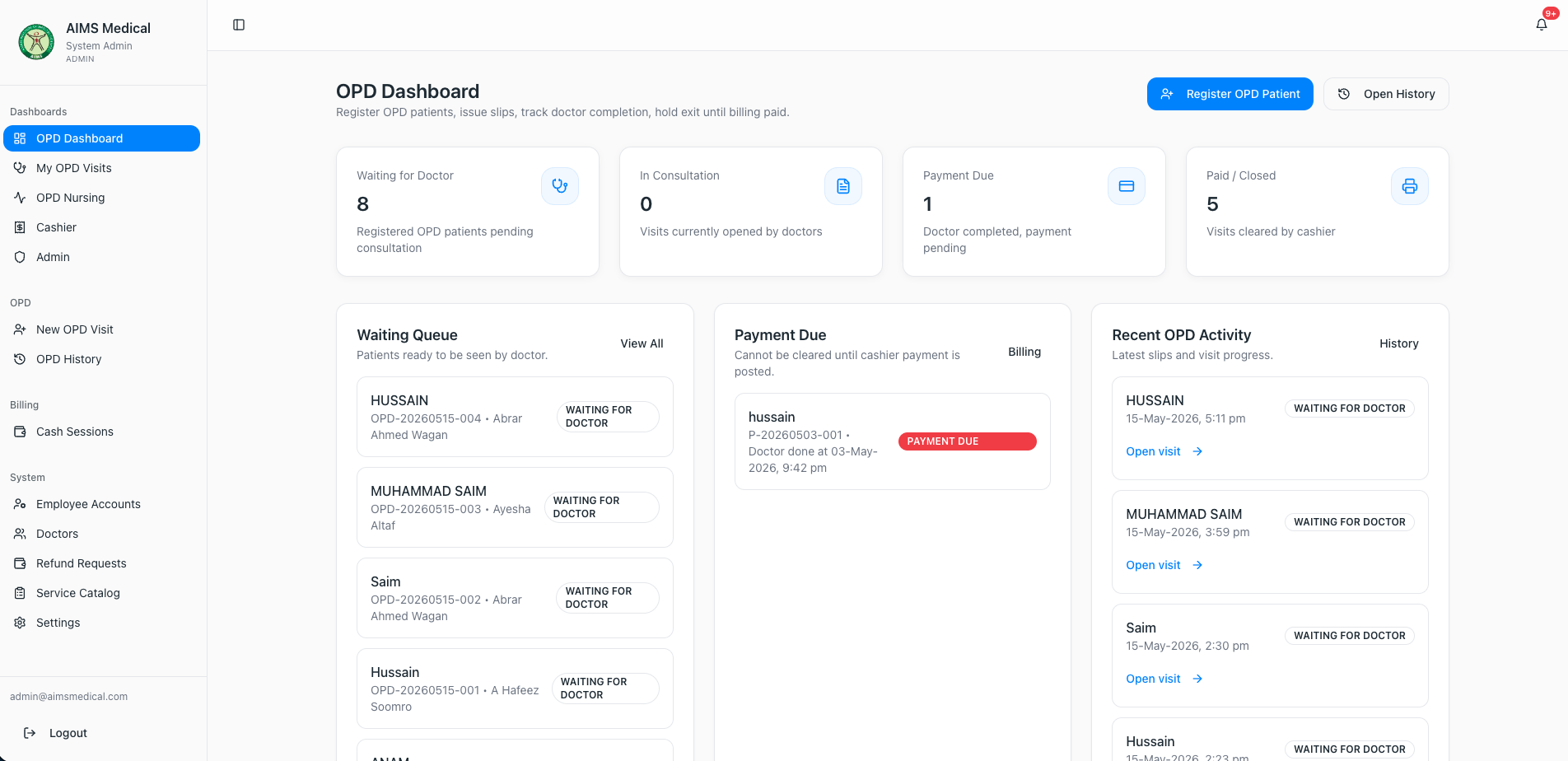
- Patient master with demographics, history, identifiers, family linkages, and photo-on-file.
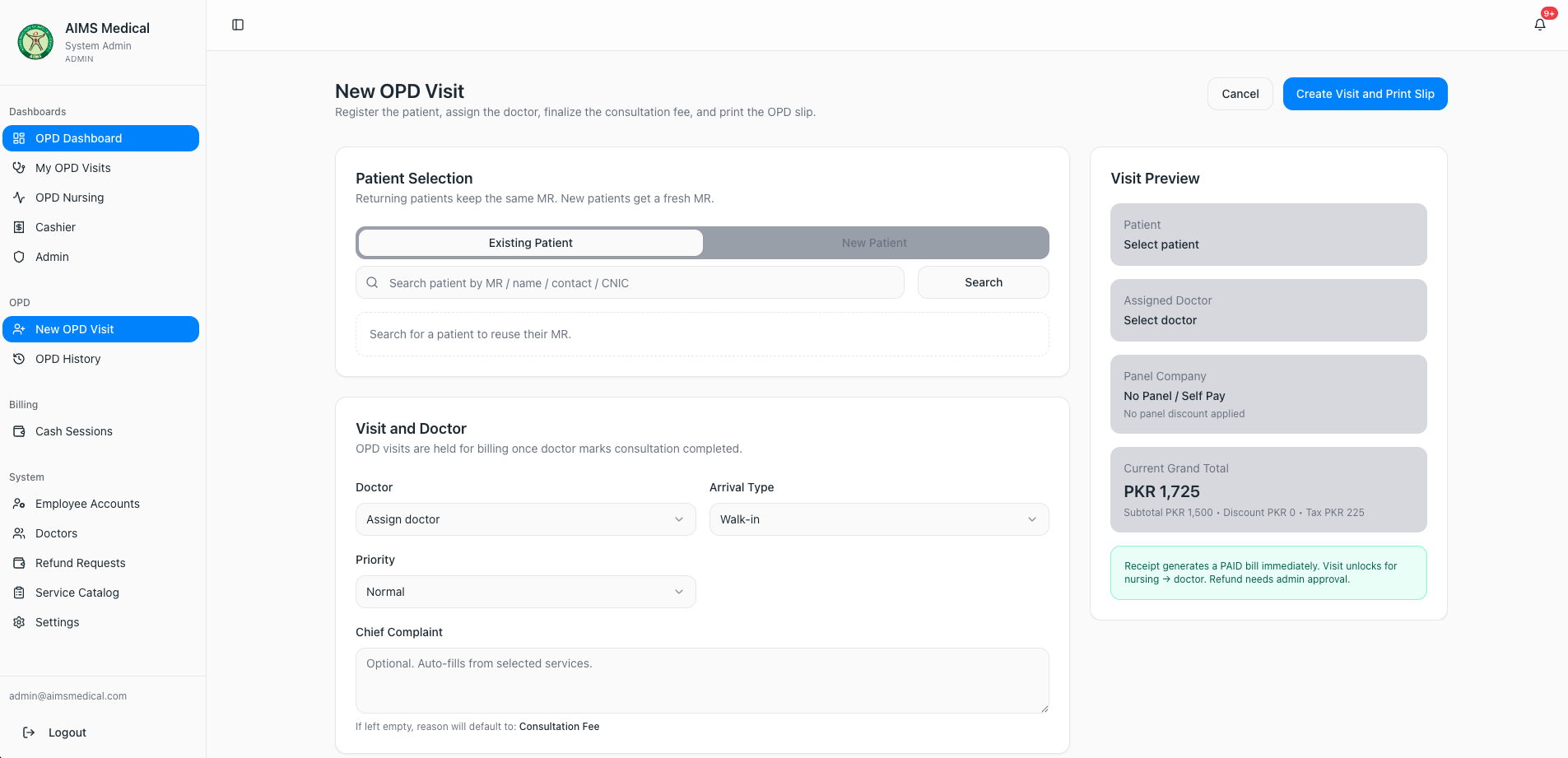
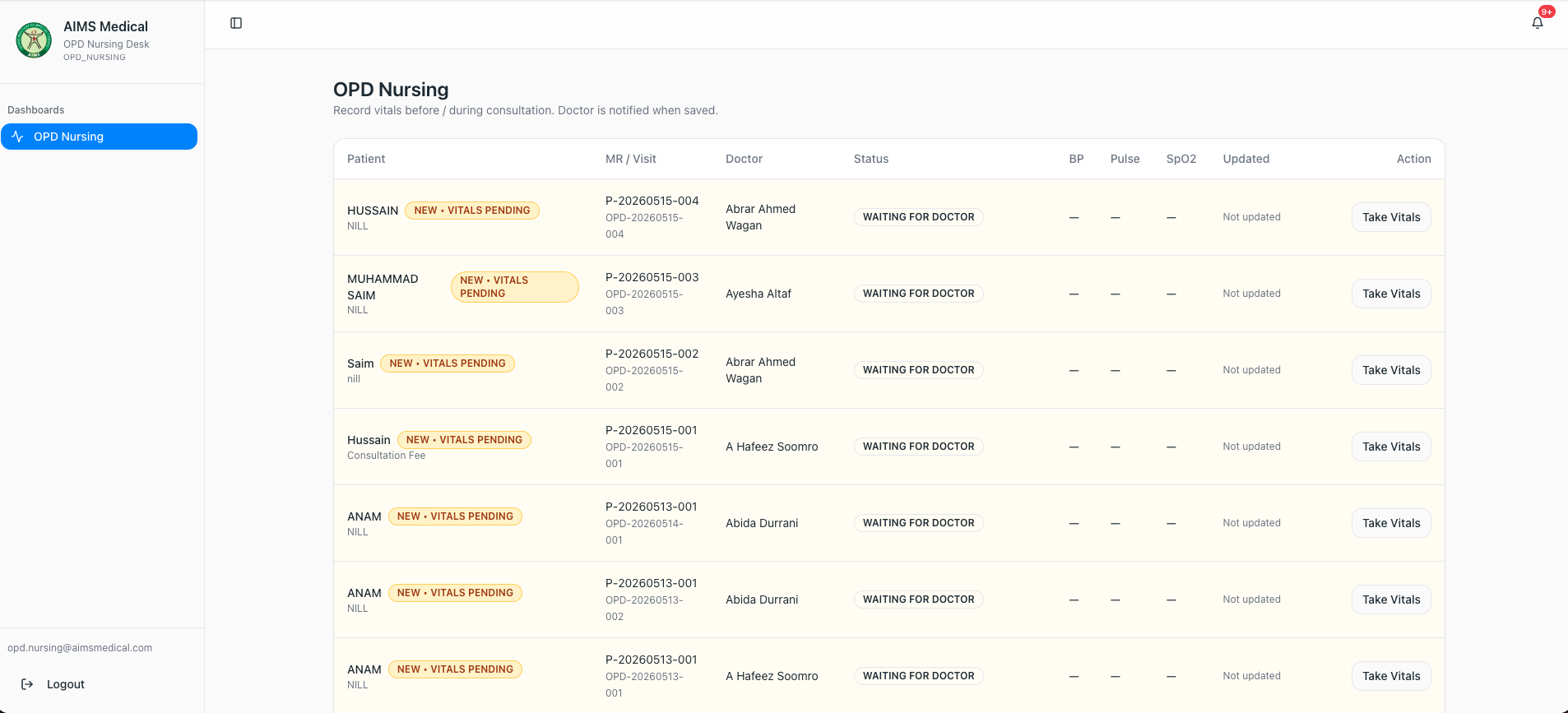
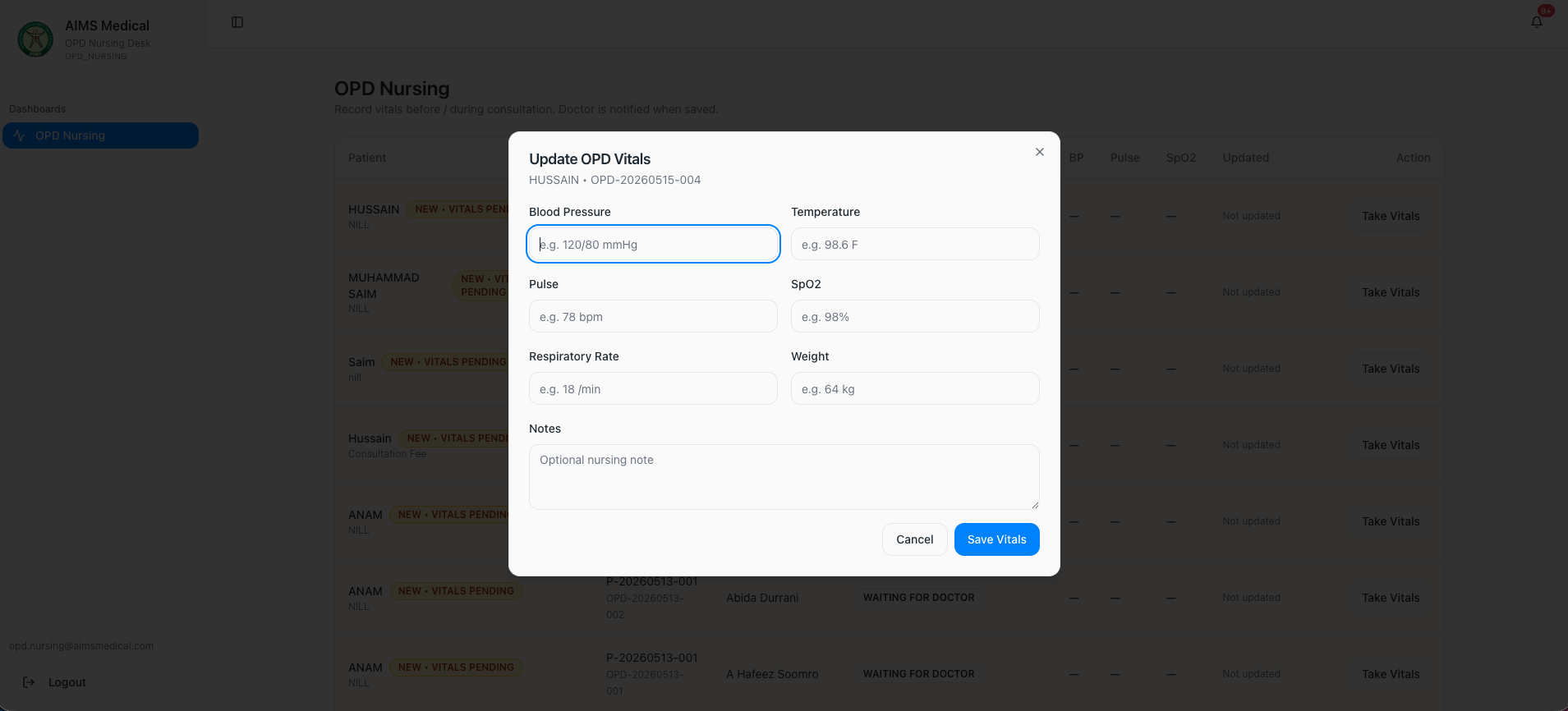
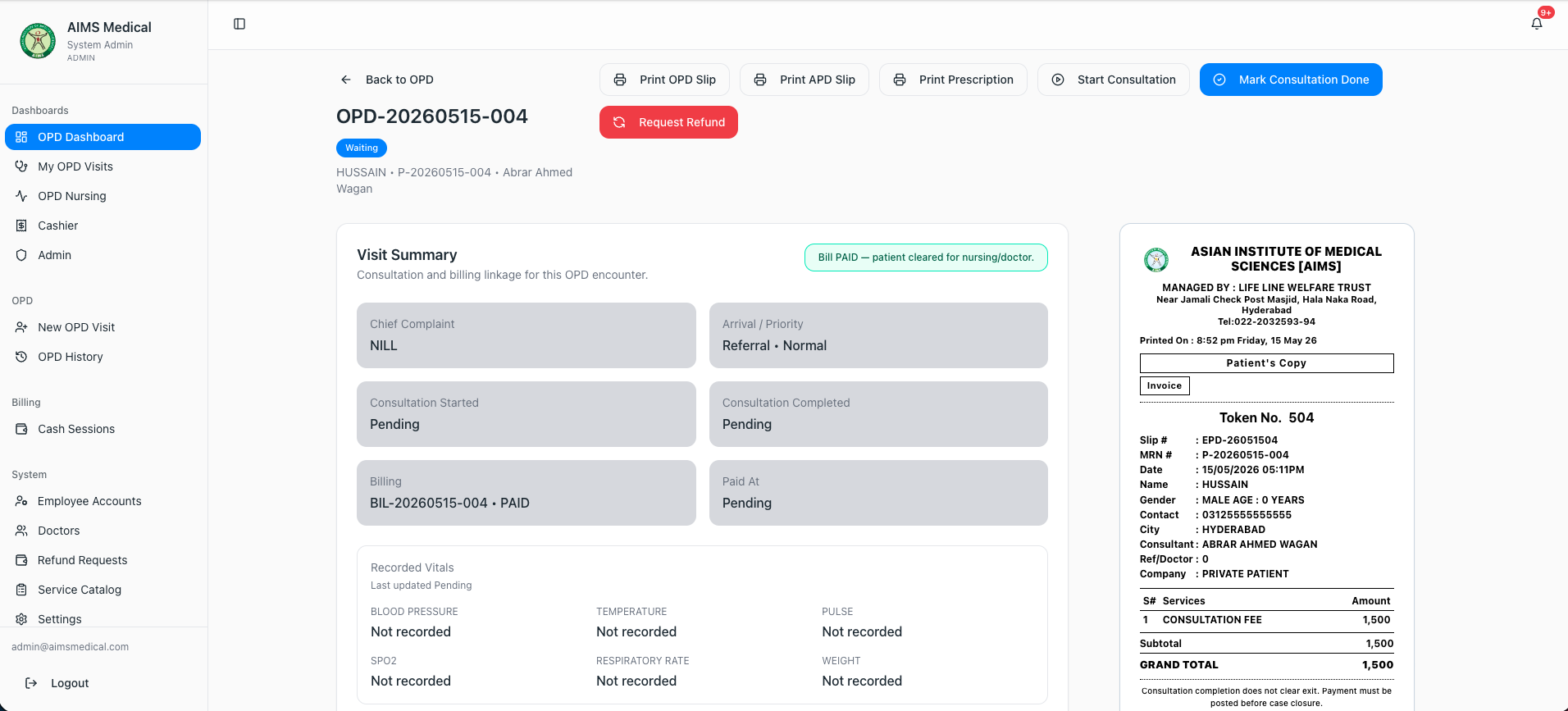
- OPD workflow — registration, triage, consultation notes, prescriptions, follow-ups, all tied to the unified patient identity.
- IPD workflow — admission, ward and bed allocation, daily charts, charge-out, discharge summaries.
- Lab module — test ordering from OPD/IPD, result entry, signed reports, lab-to-billing integration.
- Pharmacy module — SKU management, expiry tracking, dispensing, prescription-to-pharmacy flow.
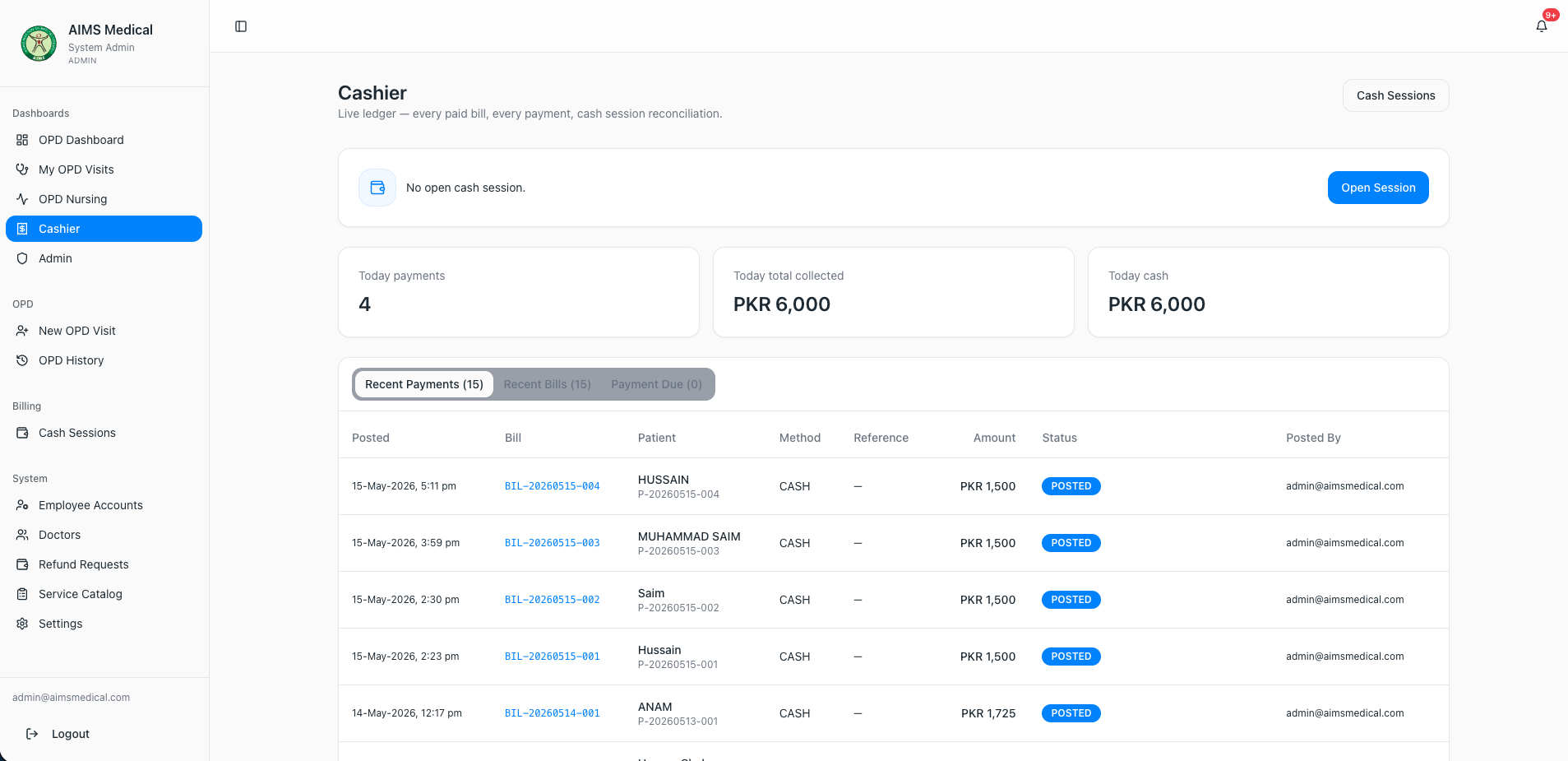
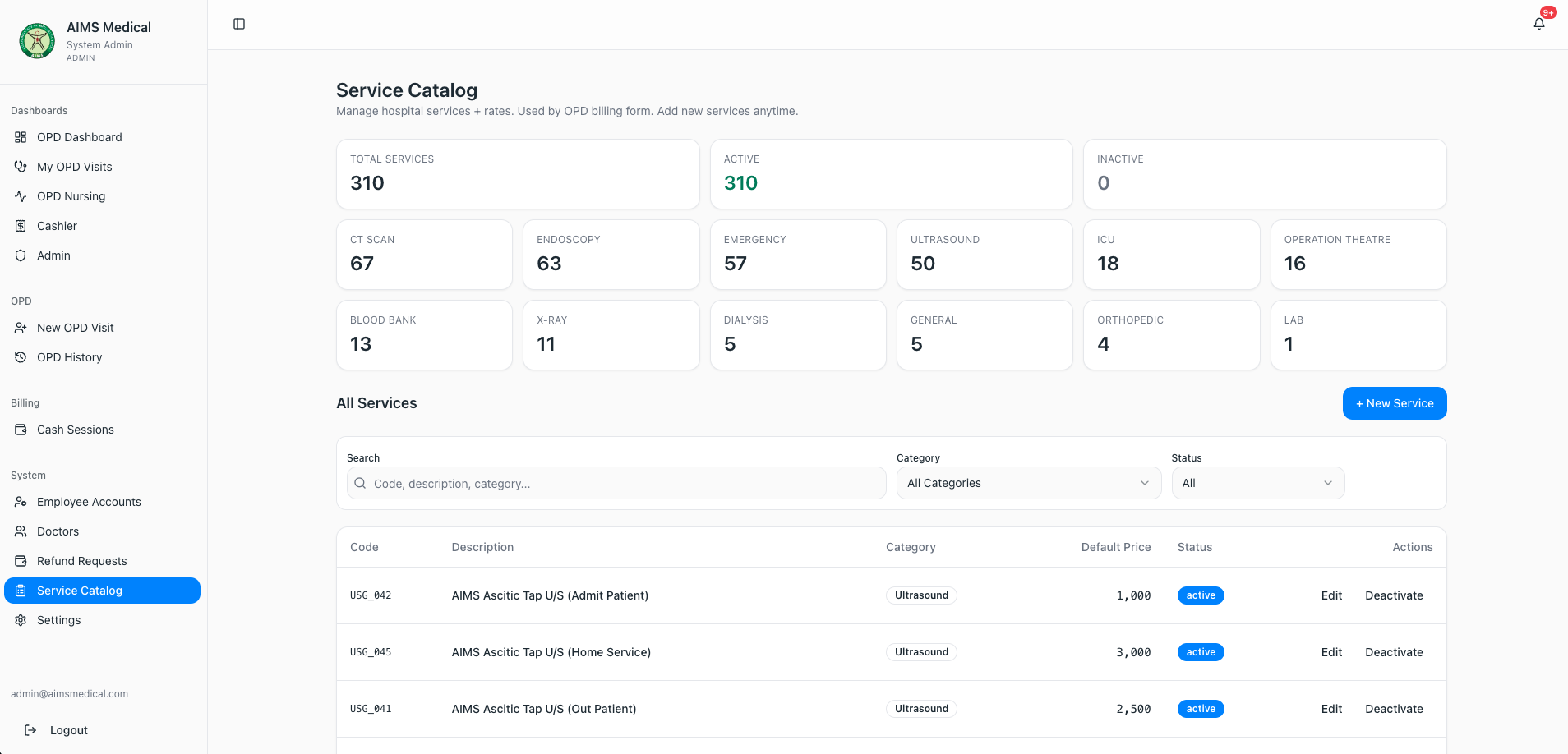
- Billing engine — multi-tier pricing, insurer / panel handling, OOP cash collection, refunds, end-of-day reconciliation, hybrid sales (card + cash + wallet).
- Operational reporting — dashboards for hospital leadership, NABH/NABL-aligned exports, board-level KPIs.
- Role-based access across 7+ functional roles (clerks, nurses, doctors, lab technicians, pharmacists, billing, administration) with full audit logging.
How we delivered
The engagement started with operational discovery — Xenara engineers spent time walking each department at AIMS, observing actual workflows for OPD registration, ward operations, lab order-to-result cycles, pharmacy dispensing, and end-of-day cash reconciliation. The HMS was designed against the operations we observed, not a feature checklist.
Engineering a hospital system is half code, half change management. The first month of go-live mattered as much as the six months of build.
Rollout was phased — OPD first to validate the platform and the change-management playbook, followed by IPD, lab, pharmacy, and reporting in priority order. During each phase the legacy / paper workflow ran in parallel for a controlled period before the digital system became the system of record. Xenara engineers were on-site during go-live shifts and remained on-call for the first month after each phase launched.
Architecture & compliance
- Hosting: Hospital-controlled deployment with on-prem database and application servers, UPS-mapped during installation, with controlled internet egress for non-PHI services.
- Security: Role-based access control, encryption at rest and in transit, configurable data retention.
- Audit: Every PHI-touching action logged with actor, timestamp, and source — NABH/NABL audit-ready.
- Connectivity resilience: Local caching + sync queues so front-desk and lab continue operating through outages.
- Print stack: Receipts, prescriptions, and lab reports with bilingual rendering (English + Urdu typography where useful).
Outcomes
- A single patient master that survives every department transition at the hospital.
- Operational reporting that previously took the administration team days now runs in minutes.
- NABH/NABL-aligned audit logging on every PHI-touching action, ready for accreditation reviews.
- Multi-tier OPD billing replacing manual reconciliation across panel, insurer, and self-pay flows.
- Lab and pharmacy modules integrated end-to-end with patient and billing — no more re-keying.
- A platform AIMS continues to evolve with Xenara as new specialties, modules, and integrations come online.
Why AIMS chose a custom HMS
Off-the-shelf HMS products were considered. They failed in the same way most do in real hospital environments: they assume the hospital will bend its workflows around the software, and they treat multi-tier OPD billing and Pakistani payment realities as edge cases rather than core flows. A custom HMS built around AIMS's actual operations was the right answer for a hospital of this scale and accreditation standard.
If you're evaluating an HMS
Talk to us before you sign with any vendor. We'll walk your operation, map your real workflows, and give an honest assessment of whether custom HMS or off-the-shelf is the right call for you. See our hospital management system service for the full process, or email hello@xenara.ai.
“Xenara understood the complexity of our hospital operations and built a system around the way our teams actually work. Having patient management, billing, laboratory, pharmacy, and reporting connected in one platform has made our operations significantly more efficient.”