
Hospital management systems built for hospitals that actually run.
We design and ship hospital management systems (HMS / HIMS) that consolidate admissions, billing, lab, pharmacy, OPD/IPD, and reporting into one platform the team will actually use. Live at Asian Institute of Medical Sciences (AIMS), a NABH-accredited 250-bed super-specialty hospital in Sindh, Pakistan. Built by a Canadian software company that works with healthcare organizations across Canada, the US, Pakistan, India, and the Middle East.
- Live deployment
- 250-bed
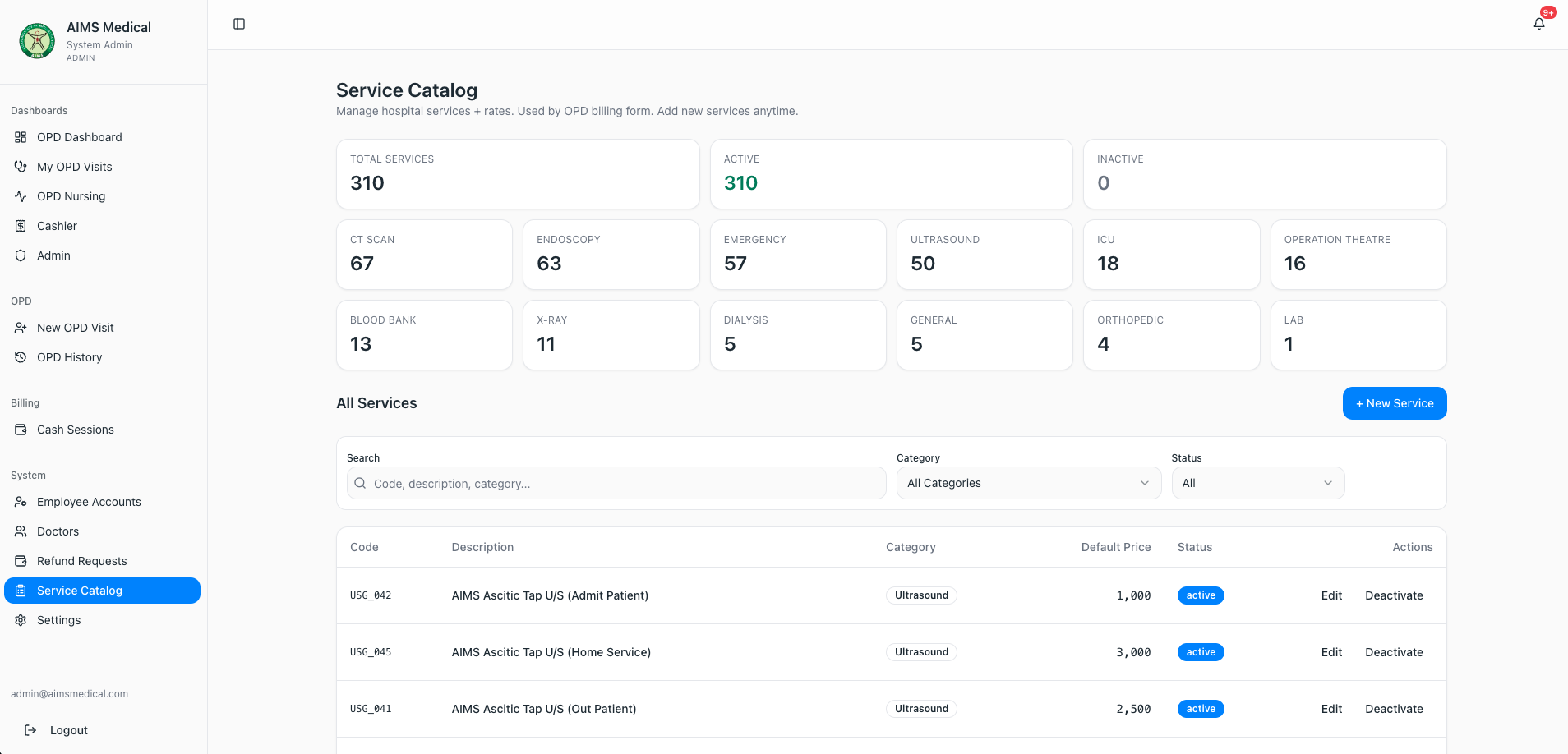
- Active services
- 310
- Reporting
- Days → Minutes
- OPD pilot timeline
- 8 – 10 wks
AIMS — NABH-accredited super-specialty hospital in Sindh.
Configured by AIMS admin in the OPD billing form, no engineering involvement.
Hospital administration reporting that previously took days runs in minutes.
From kick-off to first live department.
Last updated
Why off-the-shelf HMS rarely works
Most off-the-shelf hospital management systems force the hospital to bend around the software. That works for greenfield clinics. It breaks for established hospitals with their own admission flows, billing policies, insurer relationships, and reporting demands from regulators or boards.
We build HMS around how each hospital actually operates. Same product principles in every deployment — patient master, billing, encounters, audit trails, role-based access — but configured (and where needed, customized) for the operational reality on the ground.
For hospitals in Pakistan, India, and the broader South Asia / Middle East region — where workflows often involve paper records, multiple billing tiers, and large outpatient (OPD) volumes — our HMS is shaped for that operational reality. For Canadian deployments, we emphasize PHIPA / PIPEDA compliance, EMR interoperability, and provincial reporting requirements.
“Xenara understood the complexity of our hospital operations and built a system around the way our teams actually work. Having patient management, billing, laboratory, pharmacy, and reporting connected in one platform has made our operations significantly more efficient.”
What an Xenara HMS includes
- Patient master — demographics, history, identifiers, family linkages, photo-on-file.
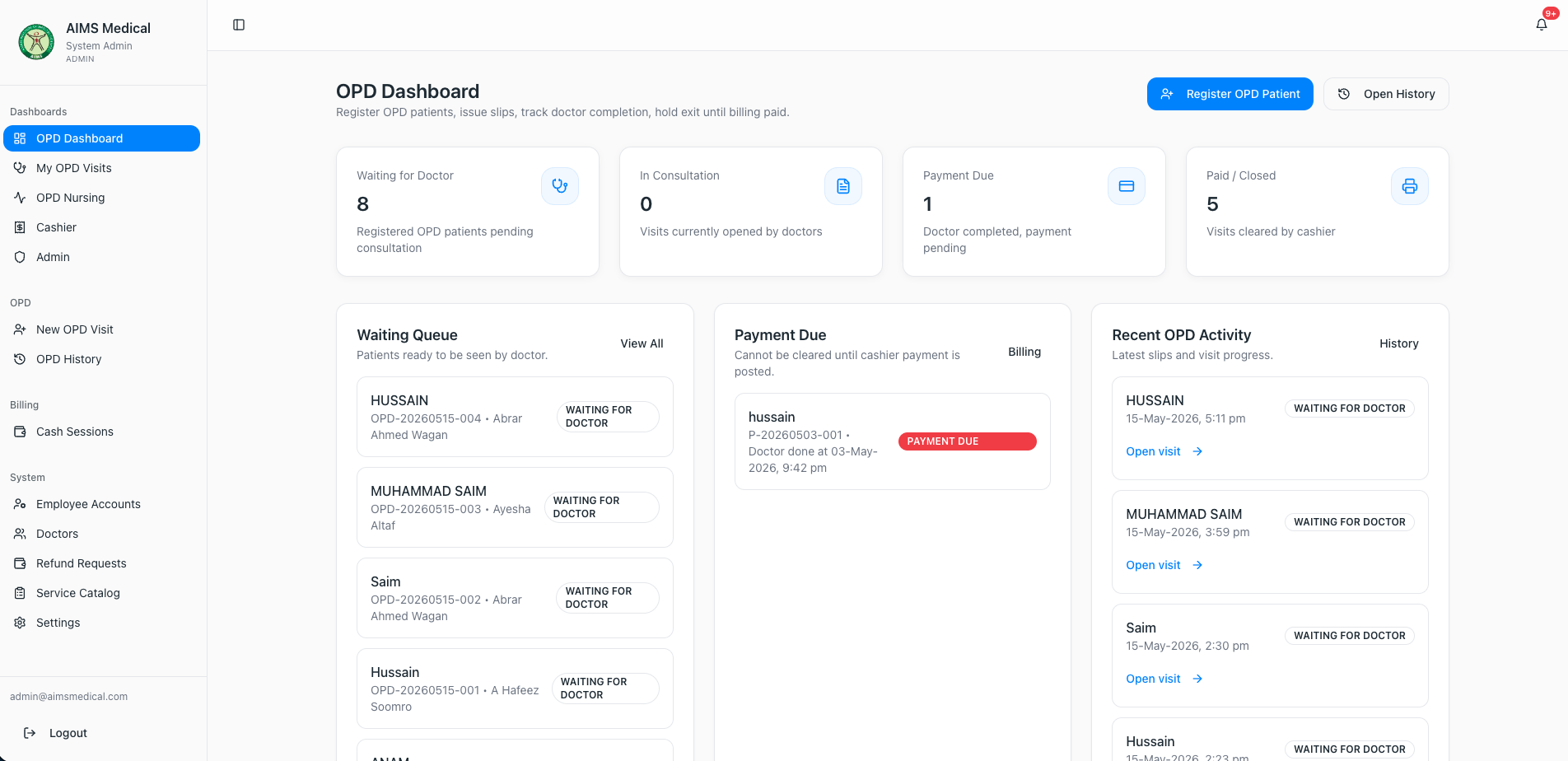
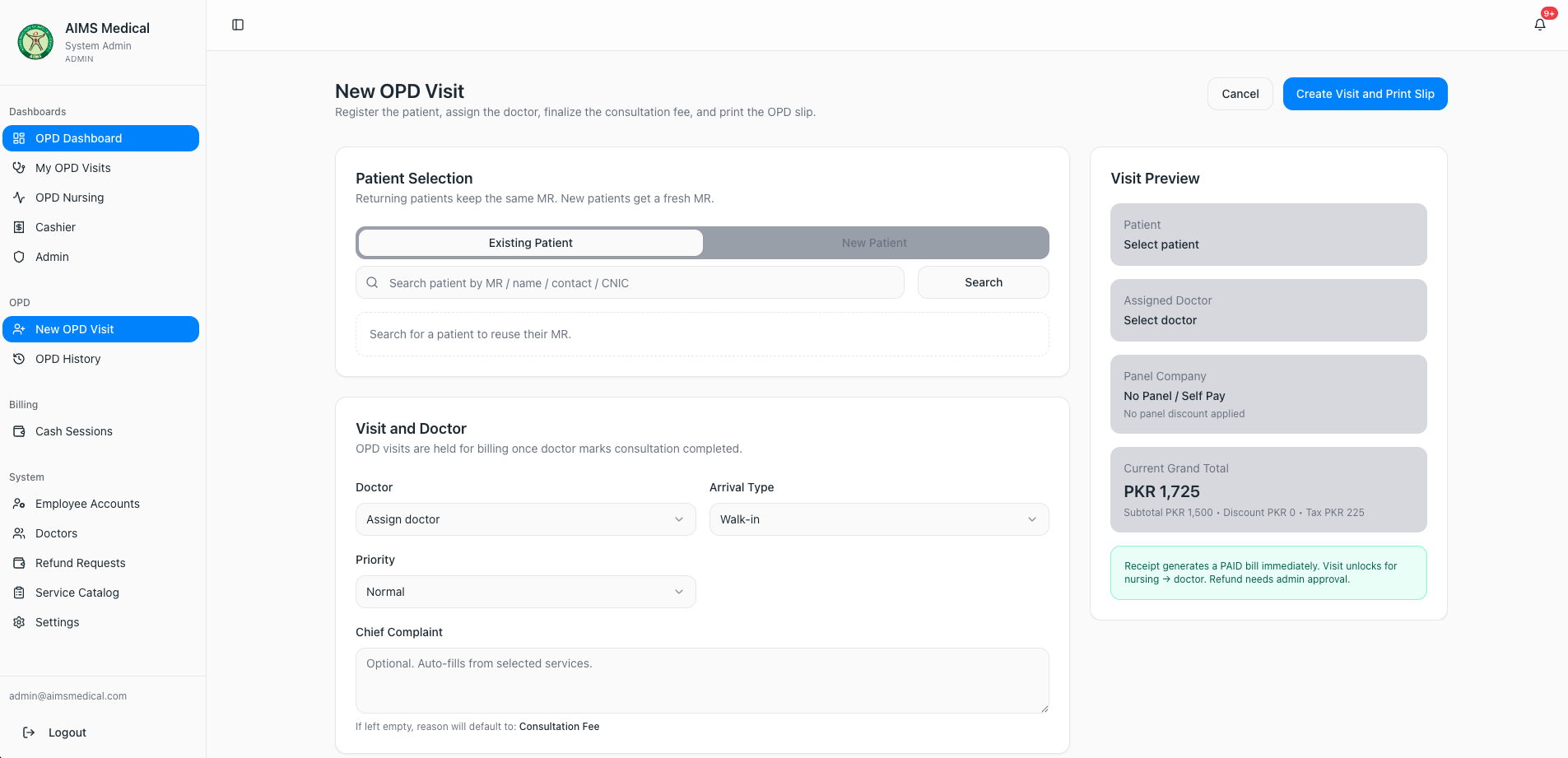
- OPD workflow — registration, triage, consultation notes, prescriptions, follow-ups.
- IPD workflow — admission, ward management, bed allocation, daily charts, discharge summaries.
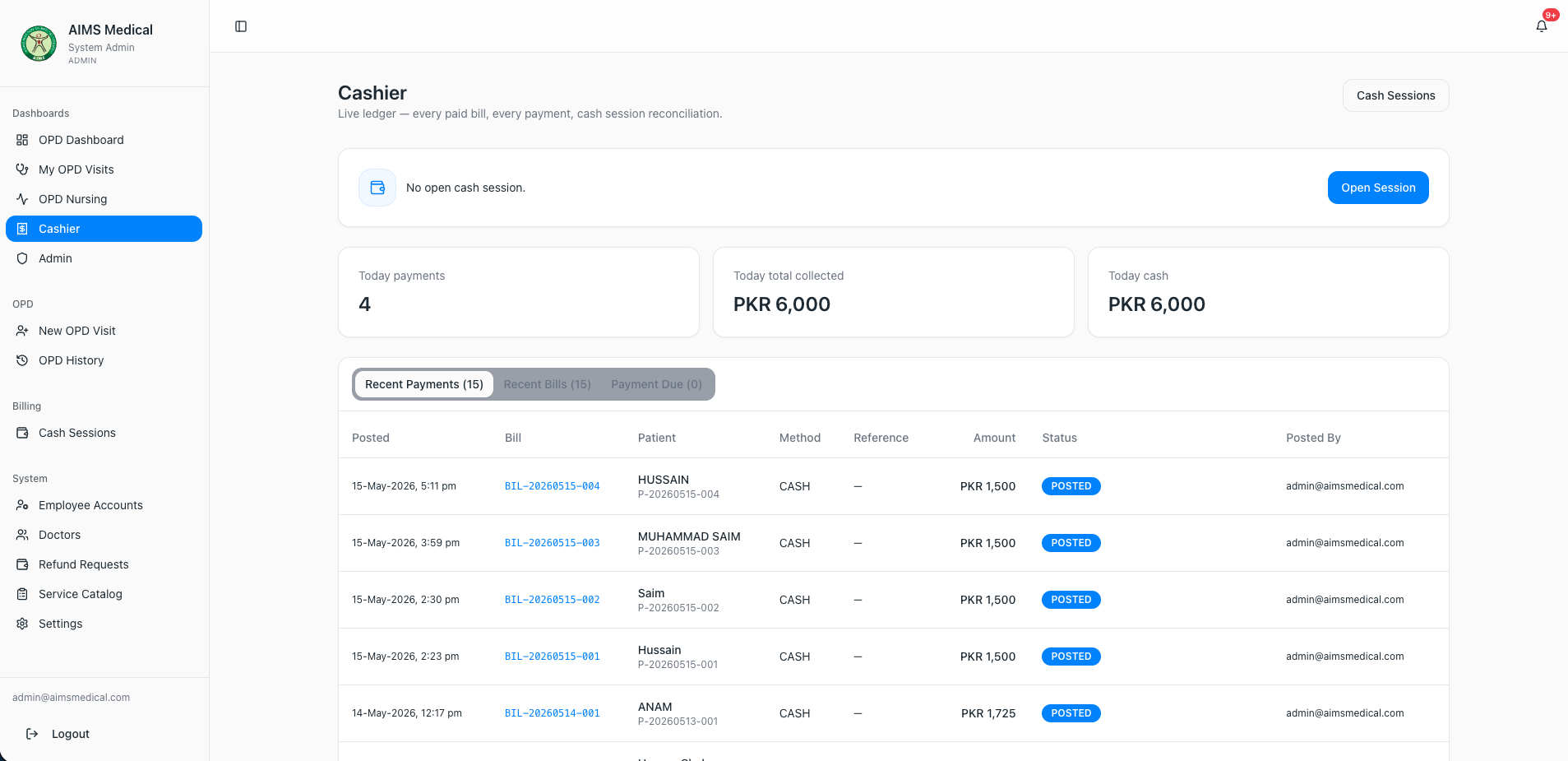
- Billing — multi-tier pricing, insurer / panel handling, OOP collection, refunds, EOD reconciliation.
- Lab module — test ordering, result entry, signed reports, lab-to-billing integration.
- Pharmacy module — inventory, dispensing, expiry tracking, prescription-to-pharmacy flow.
- Operating theatre — schedule, surgical notes, materials charge-out.
- Reporting — operational dashboards, regulator-ready exports, board-level KPIs.
- Role-based access with full audit trail of who saw and changed what.
- HL7 / FHIR integration where EMR interoperability is required.
- Mobile-friendly interface for doctors and nurses on shift.
In production at AIMS Hyderabad
How we deliver
- 01
Operational discovery (2–3 weeks)
We walk every department — OPD, IPD, lab, pharmacy, OT, billing — and map the real workflows. The HMS is shaped around what we see, not what a vendor brochure assumes.
- 02
Core foundation
Patient master, user management, audit logging, billing engine, and the first end-to-end OPD flow live in staging.
- 03
Module rollout
Lab, pharmacy, IPD, OT, and reporting added in priority order. Each module is parallel-piloted against current paper or legacy systems before it replaces them.
- 04
Go-live + training
Phased go-live (typically OPD first, then IPD), in-person staff training, on-call coverage for 30 days.
- 05
Steady state + evolution
Monthly support retainer — bug fixes, new reports, integrations, regulatory changes. Same engineers who built it stay on the work.
Industries we ship this for
Engagement & pricing
Best for: validating the HMS approach on one department (often OPD) before broader rollout.
Best for: hospitals or groups committing to a full platform replacement.
Best for: post-launch support, new modules, regulatory updates, and integrations.
Frequently asked
How long does an HMS deployment take?+
OPD pilot typically goes live in 8–10 weeks. Full multi-module HMS rollout (OPD + IPD + lab + pharmacy + billing + reporting) is 4–9 months depending on hospital size and integration scope.
Will it integrate with our existing systems?+
Yes — we integrate with EMRs, accounting software, lab analyzers, biometric attendance, pharmacy stock systems, and provincial / regulatory reporting endpoints. HL7 and FHIR where applicable.
Is this HIPAA / PIPEDA / PHIPA compliant?+
Yes — compliance is designed in. Access controls, audit logging, encryption at rest and in transit, and configurable data residency. We've shipped HMS deployments under Canadian provincial privacy regimes and similar frameworks elsewhere.
Can we host it on our own servers?+
Yes — Xenara HMS can be deployed on hospital-managed servers, hybrid (DB on-prem, app on cloud), or fully managed in our cloud. Common in markets where data residency is a regulatory or board-level requirement.
How do you handle the transition from paper or legacy systems?+
Phased rollout, parallel running of old and new systems during pilot, and bulk-import of historical patient records. The hospital never operates without a working system.
Do you build for hospitals in Pakistan and South Asia?+
Yes. We're a Canadian company that works remote-first with hospitals in Pakistan, India, the UAE, and the broader region. Engagements account for the operational realities of those markets — multi-tier OPD billing, paper-to-digital transitions, large outpatient volumes, and Urdu-friendly print output where useful. English and Urdu communication.
Talk to us
Tell us what you're trying to ship and what's in the way. You'll get a real reply from a senior engineer — not a sales script.